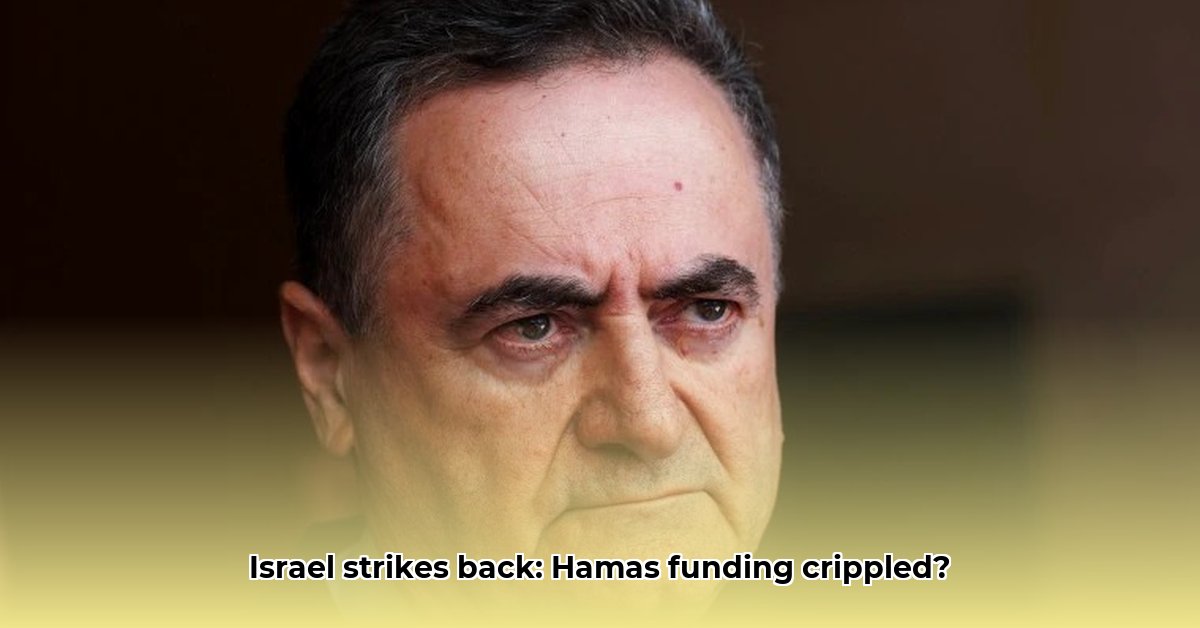
Israel's Targeted Strike: Implications for Regional Stability
The targeted elimination of a senior commander within Iran's Islamic Revolutionary Guard Corps (IRGC) by Israel has sent shockwaves through the Middle East, raising concerns about escalating regional tensions and the potential for further instability. This action, coming shortly after the October Hamas attacks, represents a significant escalation in the ongoing conflict and demands careful analysis of its immediate and long-term consequences. This event necessitates a detailed examination of its strategic implications for Israel, Iran, Hamas, and the international community.
The operation itself points to Israel possessing highly refined intelligence capabilities, identifying the commander as a crucial figure in Hamas's financial network. This suggests a calculated move aimed at disrupting Iranian support for Hamas, but the full extent of the commander’s role remains subject to ongoing investigation and verification from independent sources. The accuracy and reliability of the intelligence underpinning the operation necessitate rigorous scrutiny.
Short-Term and Long-Term Impacts: A Shifting Geopolitical Landscape
The immediate aftermath has witnessed a surge in regional tension. Iran is likely to weigh its retaliatory options, ranging from limited action to more substantial escalation. Hamas, facing a disruption to its funding streams, is forced to re-evaluate its operational strategies. The international community, meanwhile, is working to prevent wider conflict, navigating complex and potentially hazardous diplomatic terrain.
The long-term consequences, however, are less certain. Further targeted strikes by Israel remain a possibility, potentially triggering a dangerous escalation. Iran might respond by bolstering its proxy forces, leading to further instability. This delicate balance demands a careful assessment of the various stakeholders and potential outcomes.
Stakeholder Analysis: Assessing the Winners and Losers
The impact of this targeted strike reverberates throughout the region, affecting various key actors in complex ways. The table below explores the potential short-term and long-term consequences for key players:
| Stakeholder | Potential Short-Term Outcomes | Potential Long-Term Outcomes |
|---|---|---|
| Israel | Enhanced intelligence capabilities, strong deterrent message | Improved military standing, but elevated risk of further conflict and instability |
| Iran | Increased pressure to retaliate, potential reputational damage | Possible increase in proxy activities, strategic recalibration |
| Hamas | Disruption of funding networks, heightened security concerns | Need to adapt funding methods, potential shift in tactics |
| International Community | Increased diplomatic efforts to de-escalate | Continued pressure for restraint, potential for expanded peacekeeping efforts |
Isn't it crucial to understand the potential for unintended consequences? How might the international community’s efforts to de-escalate impact the region’s intricate power dynamics?
The Legal and Ethical Dimensions: A Moral and International Law Conundrum
The targeted killing of a high-ranking official raises profound ethical and legal questions. The proportionality of the response, its adherence to international law, and the broader implications for state sovereignty remain subjects of intense debate and scrutiny. The legality under international humanitarian law and the concept of self-defence are key aspects of this ongoing discussion.
Long-Term Implications: A Path Forward
Predicting the future with certainty is impossible. Nevertheless, several key factors will shape the coming months and years. Iran's response – whether measured or aggressive – will be paramount. The effectiveness of international diplomatic efforts will play a decisive role. Furthermore, Israel's subsequent actions will profoundly impact the overall trajectory of the conflict. The situation is highly dynamic, and the coming weeks, months, and even years will be critical in determining the larger regional implications.
Pivotal Factors Shaping the Future:
- Iran's Response: Will Tehran opt for a measured response or a significant escalation?
- International Community Action: How will diplomatic efforts manage to de-escalate the situation?
- Israel's Strategy: How will Israel adjust its approach based on the immediate and ongoing consequences?
These questions highlight the inherent complexities and uncertainties in the evolving situation. The delicate balance between stability and conflict continues to hang in the balance.